 Getty
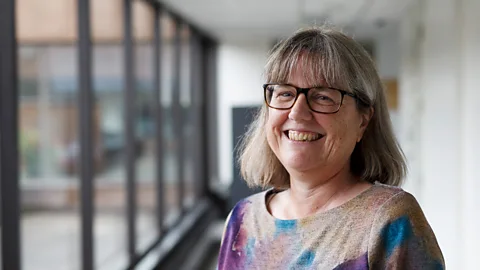
GettyMore women are graduating with PhDs in science – so why was Donna Strickland only the third female physicist to receive a Nobel prize?
Though biochemical engineer Frances Arnold also won this year, for chemistry, the rarity of female Nobel laureates raises questions about women’s exclusion from education and careers in science. Female researchers have come a long way over the past century. But there’s overwhelming evidence that women remain underrepresented in the Stem fields of science, technology, engineering and math.
Studies have shown those who persist in these careers face explicit and implicit barriers to advancement. Bias is most intense in fields that are predominantly male, where women lack a critical mass of representation and are often viewed as tokens or outsiders.
When women achieve at the highest levels of sports, politics, medicine and science, they serve as role models for all of us, especially for girls and other women. But are things getting better in terms of equal representation? And what still holds women back in the classroom, in the lab, in leadership and as award winners?
Traditional stereotypes hold that women ‘don’t like math’ and ‘aren’t good at science’. Both men and women report these viewpoints – but researchers have empirically disputed them. Studies show that girls and women avoid Stem education not because of cognitive inability, but because of early exposure and experience with Stem, educational policy, cultural context, stereotypes and a lack of exposure to role models.

 Getty
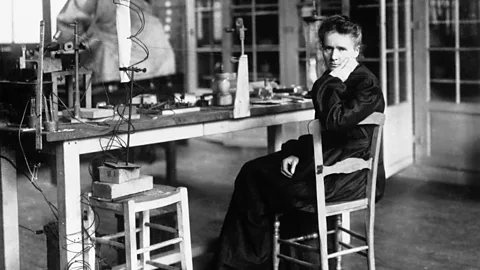
GettyFor the past several decades, efforts to improve the representation of women in Stem fields have focused on countering these stereotypes with educational reforms and individual programmes that can increase the number of girls entering and staying in what’s been called the Stem pipeline – the path from primary and secondary school to university to postgraduate training.
More women are graduating with Stem PhDs and earning faculty positions. But they go on to encounter glass cliffs and ceilings as they advance through their academic careers.
In addition to issues related to the gender pay gap, the structure of academic science often makes it difficult for women to get ahead in the workplace and to balance work and life commitments. Bench science can require years of dedicated time in a laboratory. The strictures of the tenure-track process can make maintaining work-life balance, responding to family obligations, and having children or taking family leave difficult, if not impossible.
 Getty
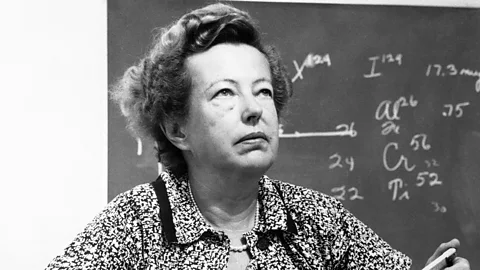
GettyUniversities, professional associations, and federal funders have worked to address a variety of these structural barriers. Efforts include creating family-friendly policies, increasing transparency in salary reporting, enforcing Title IX protections in the US, providing mentoring and support programmes for women scientists, protecting research time for women scientists, and targeting women for hiring, research support and advancement.
These programmes have mixed results. For example, research indicates that family-friendly policies such as leave and onsite child care can exacerbate gender inequity, resulting in increased research productivity for men and increased teaching and service obligations for women.
Women scientists are afforded less of the respect and recognition that should come with their accomplishments. Research shows that when people talk about male scientists and experts, they’re more likely to use their surnames and more likely to refer to women by their first names. Why does this matter? Because experiments show that individuals referred to by their surnames are more likely to be viewed as famous and eminent. In fact, one study found that calling scientists by their last names led people to consider them 14% more deserving of a National Science Foundation career award.
GettyStrickland winning a Nobel Prize as an associate professor in physics is a major accomplishment; doing so as a woman who has almost certainly faced more barriers than her male counterparts is, in my view, monumental.
When asked what it felt like to be the third female Nobel laureate in physics, Strickland noted that at first it was surprising to realise so few women had won the award. “But, I mean, I do live in a world of mostly men, so seeing mostly men doesn’t really ever surprise me either,” she said.
Seeing mostly men has been the history of science. Addressing structural and implicit bias in Stem will hopefully prevent another half-century wait before the next woman is acknowledged with a Nobel Prize for her contribution to physics. I look forward to the day when a woman receiving the most prestigious award in science is newsworthy only for her science and not her gender.
This article originally appeared on The Conversation, and is republished under a Creative Commons licence.
If you liked this story, sign up for the weekly bbc.com features newsletter, called “If You Only Read 6 Things This Week”. A handpicked selection of stories from BBC Future, Culture, Capital, and Travel, delivered to your inbox every Friday.