

 BBC
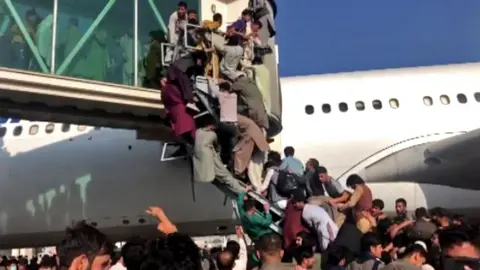
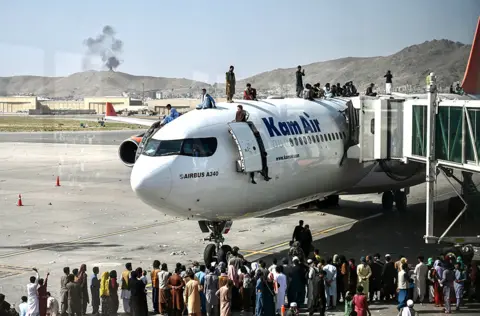
BBCThe Financial Times describes scenes of “absolute chaos” as the airport was “overrun” – with some people falling to their deaths after clinging to aircraft as they took off. “The flight from hell”, says the Metro. “Race to escape Kabul carnage” is the headline for the Times.
The Sun calls him “Joke Biden” – “humiliated and alone” facing a “global backlash” over his handling of the crisis. The Daily Mail highlights what it calls the president’s “blunt” and “extraordinary” response – “it’s the Afghans’ own fault” – in his address to the nation last night, while the Daily Telegraph argues the backlash in Washington “was matched with finger-pointing at Mr Biden in Westminster”.
It claims Ministry of Defence figures “repeatedly warned” their US counterparts that the withdrawal of troops from Afghanistan was “too fast”.
 AFP
AFPMr Biden’s address is heavily criticised by the Wall Street Journal, which accuses him of effectively telling Afghanistan to “drop dead”.
He “refused to accept responsibility while blaming others”, made false claims and “played to the sentiment of Americans tired of foreign military missions”, its editorial says.
The Washington Post resorts to “searching the sorriest episodes of US foreign policy” for an analogy to the president’s “blunders” – suggesting the Bay of Pigs and the fall of Saigon. “Worse”, it says, “this was avoidable”.
But the New York Times suggests Mr Biden’s speech “stemmed some of the howls of criticism”, with Democrats praising him for laying out the costs of America’s involvement in Afghanistan.


Both the Times and the Telegraph warn that household energy bills are expected to rise as a result of the government’s push for more hydrogen energy.
Energy minister, Anne-Marie Trevelyan, has told the Times it’s “too early” to say how much the transition will cost households, but it’s likely to be “very small”.
The Telegraph thinks the government’s plans show hydrogen will play a “niche” role in cutting carbon emissions, and it says experts have warned that bill payers could be locked into paying for the development of “pointless” technology.
 Getty Images
Claims by a Chinese woman who says she was held for more than a week at a secret jail in Dubai, run by the Chinese embassy, are highlighted by the Times.
It argues the revelations “throw striking new light” on the extent of Beijing’s targeting of dissidents abroad – and the help it’s receiving from other authoritarian regimes, including Western allies.
The paper says the UAE has viewed London and Washington as “unreliable” for more than a decade now and, in searching for friends who do not deliver lectures on human rights, “giving Beijing space to interrogate dissidents is a small price to pay for an extra vote on the UN Security Council”.