 Getty Images
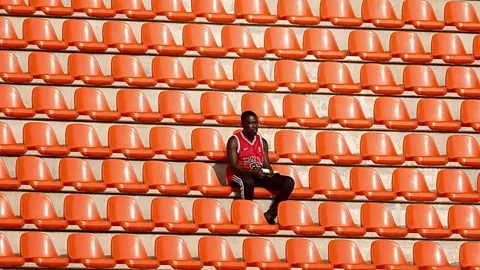
In the office, on transport, at home…Sitting down is ingrained in most peoples’ days. But, due in part to vascular dysfunction, staying sedentary for too long can increase the risk of serious health conditions like cardiovascular disease and type 2 diabetes.
In 1953, epidemiologist Jeremy Morris found that London bus drivers were more than twice as likely as bus conductors to develop coronary heart disease.
Demographically (in age, sex and income range) the two groups of workers were the same, so why was there such a significant difference?
Morris’ answer: bus conductors were required to be on their feet and regularly climb the steps of London’s iconic double-decker buses as they sold tickets to passengers, whereas the drivers remained seated for long stretches of time. His landmark study laid the groundwork for research on the links between physical activity and coronary health.
Whilst London bus conductors may now be a thing of the past, Morris’ results are more relevant than ever. Since the Covid-19 pandemic, there has been a huge shift towards working from home, which is likely to increase our collective sitting time. Without the trips to the water cooler and trot from meeting room to meeting room, it’s easy to spend hours sat behind a desk without getting up. (Office culture, however, had already changed our working lives so much by the 1980s that some researchers joked that our species had become Homo sedens – the “seated man” – rather than Homo sapiens.)

 Getty Images
Why does sedentary behaviour increase risk of cardiovascular disease? The primary hypothesis is increased vascular dysfunction, particularly in the legs. The vascular system is responsible for keeping blood and lymph fluid – which forms part of the immune system – moving through the blood vessels.
David Dunstan, a physiologist at Deakin University’s Institute for Physical Activity and Nutrition, in Melbourne, Australia, has extensively researched the effects of prolonged sitting and possible interventions.
“What characterises sitting is a reduction in muscular activity,” says Dunstan. “If I’m on a chair, the chair is taking all the responsibility there.”
The combined effect of reduced muscular activity, lower metabolic demand and gravitational forces decreases peripheral blood flow to the leg muscles, which can lead to blood pooling in the calves. The biomechanics of sitting, with the legs usually bent, can also reduce blood flow.
Recommended by the editor
From Richard Gray, Editor
Reduced blood flow, however, reduces shear stress, and the endothelium produces vasoconstrictors like endothelin-1 which cause the blood vessels to narrow. In a vicious cycle, vasoconstriction further reduces blood flow, and blood pressure rises to keep the blood moving. High blood pressure, or hypertension, is one of the predominant risk factors for cardiovascular disease.
“That’s [vascular dysfunction] one of the potential mechanisms,” says Dunstan. “But the truth is that we haven’t been able to pinpoint the exact mechanisms, and there’s likely to be multiple.
Dunstan, who specialises in researching type 2 diabetes, also notes that sedentary behaviour increases post-meal, or post-prandial, rises in blood glucose and insulin. Impaired insulin sensitivity and impaired vascular function, both contribute to a higher risk of cardiovascular disease and type 2 diabetes.
Given all these well-known potential consequences, why is it that we sit for so long – and can we break the habit?
“I think people are becoming more sedentary because it’s what society has encouraged,” says
Benjamin Gardner, a social psychologist specialising in habitual behaviour at the University of Surrey, who has been researching why people sit for so long. “It’s not that anyone’s deliberately pushing it. It’s just as things get more efficient, we don’t have to move around so much.”
“We encouraged people to try this [standing up] in three different meetings, and we interviewed them after each one to find out how they got on, and the findings were fascinating,” says Gardner. “In a formal meeting, it was felt it was not appropriate to be standing.”
 Getty Images
Wearable technology may also help nudge us into action. In a promising new study, wearable devices called accelerometers provided 24-hour data on individual behaviour patterns including sitting, standing, sleeping and exercising. As Dunstan pointed out, this potentially allows for tailored optimal sitting and standing times, with devices then sending automatic reminders whenever we sit for too long. However, the use of technology is not without its drawbacks, as some may become frustrated by or desensitised to its prompts.
For many, sedentary behaviour can seem like an unavoidable consequence of modern life and work. But even small changes to your routine – be it stretching more, fidgeting or standing up to make a cup of tea – can help break your sitting habit.