 Getty Images
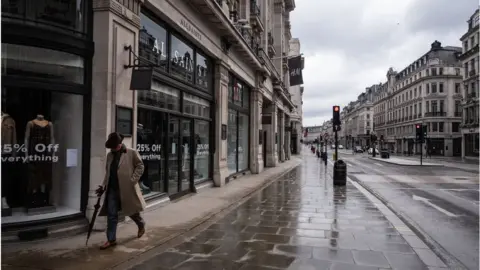
The impact of the coronavirus pandemic changed people’s lives around the world in 2020.
Lockdowns and disruption hit hundreds of thousands of UK jobs, and the government pumped billions into support schemes. The health crisis soon went hand-in-hand with an economic one.
Millions of people turned to the BBC News website for up-to-date information as the pandemic unfolded.
Here, we look back at some of the biggest business stories in a year unlike any other.
January

 Getty Images
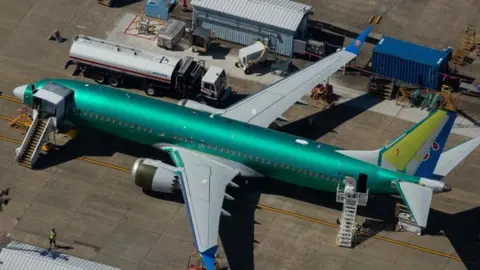
In January, coronavirus was starting to spread around the world after being detected in China. The UK was monitoring flights arriving from China as a precautionary measure, and there was a warning of an increased likelihood of cases in the UK. The virus was spreading in places such as Italy and Iran.
February
 Getty Images
Covid-19 infections started to increase in the UK at the end of February, but with only 15 confirmed cases.
March
 Google
Everything changed in March. By this point, coronavirus had spread to every UK nation.
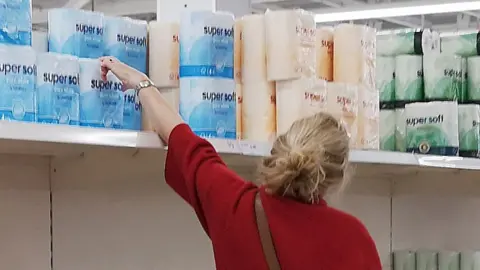
Infections rose, and people started clearing the shelves of some supermarkets as panic-buying took hold. By the end of the month, the UK was in lockdown.
The furlough scheme was announced as part of efforts to support the UK economy. The government scheme, which pays up to 80% of furloughed workers’ wages, has since been extended a number of times.
April
 Getty Images
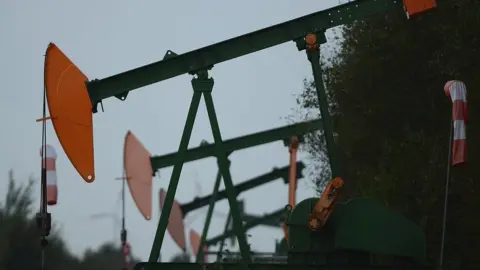
Although panic buying had subsided, Tesco said that most food would still need to be purchased in-store due to the pressure on its website.
May
At that point a quarter of the UK workforce, about 7.5 million people, was covered by the scheme, which was costing £14bn a month.
Travel restrictions have ebbed and flowed since then.
June
After falling infection rates the government relaxed some coronavirus restrictions in June as part of an effort to try to boost the economy.
July
 Getty Images
With infection rates falling, the government announced fresh measures designed to help the UK economy back on its feet.
These included the ‘Eat Out to Help Out’ scheme, which gave diners 50% off to eat in restaurants during August between Mondays and Wednesdays. Chancellor Rishi Sunak also announced a VAT reduction for the struggling hospitality and tourism industries.
August
September
Outgoing US President Donald Trump consistently refused to publish his tax returns, the first to do so since Richard Nixon in the 1970s.
So a story broken by the New York Times that the billionaire had paid just $750 (£580) in federal income tax both in 2016, the year he ran for the US presidency, and in his first year in the White House, caught readers’ attention.
In the event, the government announced an emergency jobs scheme that was less generous than the furlough scheme. However, it then changed tack again in November, and extended the original furlough scheme.
A pub curfew was brought in towards the end of September, which meant that all pubs, bars and restaurants in England were to shut no later than 22:00 each night.
October
 Getty Images
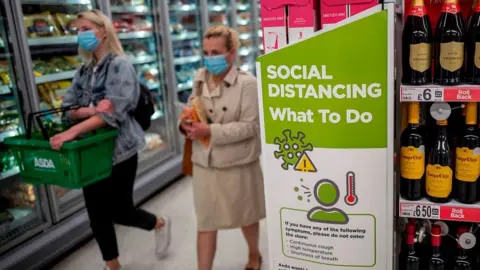
Walmart had decided to sell its controlling stake in Asda following a failed £7.3bn merger between the chain and Sainsbury’s.
The entertainment industry had been battered by the coronavirus lockdown, but cinemas had hoped for a fresh slate of major new titles to tempt people back.
November
 Getty Images
Infections had been climbing rapidly in October, contributing to the change of heart from ministers. But opponents said Chancellor Rishi Sunak had waited too long before announcing the extension.
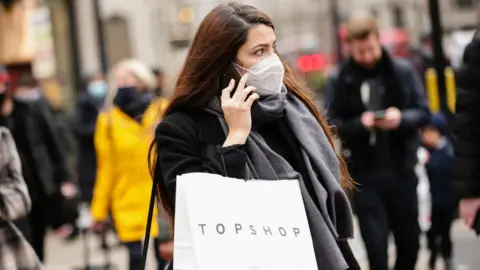
Retail has been one of the hardest-hit sectors of the economy. At the end of November, Sir Philip Green’s Arcadia retail empire, which includes Topshop, Burton and Dorothy Perkins, was on the brink of collapse. A few days later it went into administration, putting 13,000 jobs at risk.
December
 PA Media
Just as we all started looking forward to putting 2020 behind us, there was yet another piece of bad news: a new variant of coronavirus was spreading rapidly in the south east of England. Not only did this put paid to millions of people’s Christmas plans, but dozens of countries banned UK arrivals. France shut its border with the UK for 48 hours, which led to warnings of “serious disruption” to freight.
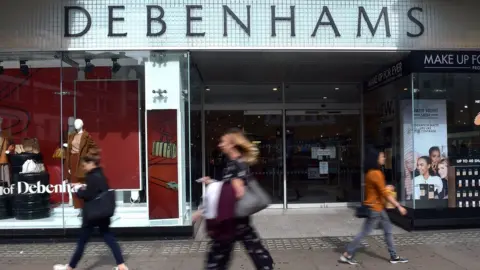
And in more retail gloom, last-ditch efforts to rescue Debenhams failed, meaning the department store is set to close with the loss of 12,000 jobs. The last remaining bidder for Debenhams, JD Sports, withdrew, crushing hopes of a rescue.