 St Barbe Museum
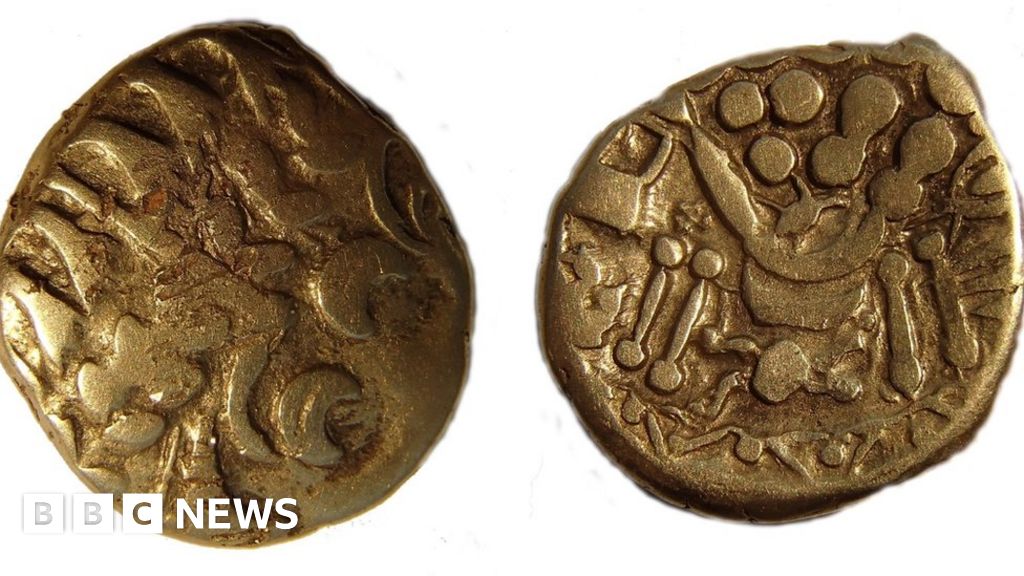
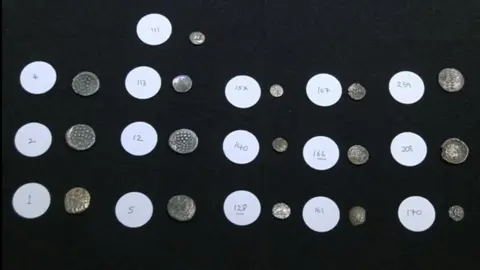
A hoard of almost 300 Celtic coins will go on display it is hoped, three years after it was unearthed in a field.
The coins were found near Southampton by three amateur detectorists who examined the field after carrying out research on Google Earth.
St Barbe Museum in Lymington is fundraising a total of £37,500 to buy and display the coins, which were catalogued by the British Museum.
TV historian Dan Snow said the find was “truly unique”.
The 269 gold and silver coins are thought to have been minted about 2,000 years ago and bear a number of images including horses, boars and people in a boat.

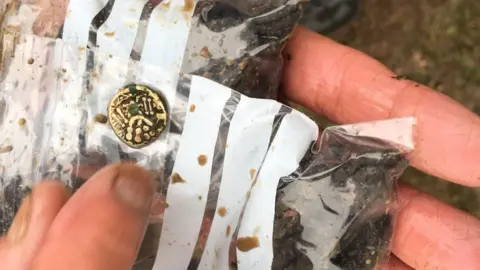
They were discovered by metal detecting enthusiasts Alvin Robinson, Kit Layman and Garry Eveleigh from Lymington.
The three began searching the site after seeing a 25m (82ft) circle in the ground on Google Earth which they suspected was a sign of a Celtic dwelling.
Mr Layman, who had only been metal detecting for six months, said: “Persistence is the secret of success – but a hoard is a detectorist’s dream.
“When you pick up a coin you wonder, ‘who was the last person to touch this – 2,000 years ago?’”
Mr Eveleigh, a detectorist since the 1970s, said the find was “mind-blowing”.
“They were pretty grubby when they came out of the ground and to see them now cleaned, and in the museum, it’s totally exhilarating,” he added.
 Alvin Robinson
St Barbe Museum has raised £30,000, with a further £7,500 needed to purchase the treasure, so they can put it on display in Lymington.
Mr Snow, who presented a podcast live from the museum, said: “They tell us so much about our Celtic ancestors.
“It’s so important a find this rare and this special should stay so close to the place where it was found, and maybe near the descendants of the men and women who buried it.”
Prof Tony King, of the University of Winchester, said: “Coin hoards can get dispersed but if they are kept together they can tell us an awful lot about this region and what was going on in the Iron Age, 2,000 years ago.
“It shows people here were living a sophisticated lifestyle, trading across the channel to Gaul, fighting, trading and making offerings to the gods.”

Leave a Reply