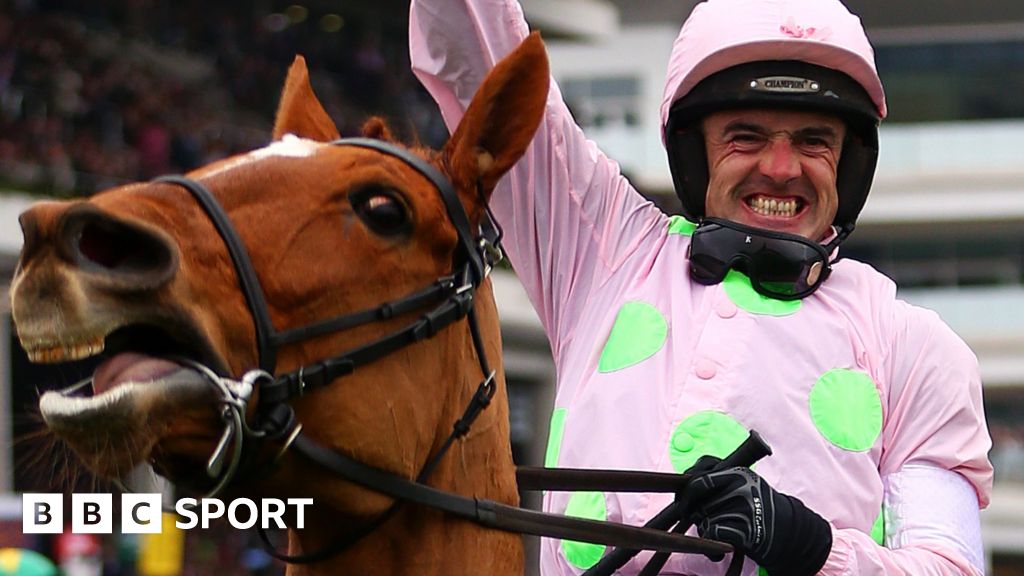
It’s a work ethic that extends to a shared attitude to pain and dealing with injuries, a common occupational hazard when steering a horse over the jumps at speeds of up to 40mph.
Ruby has sustained multiple broken bones throughout his career but sees it as just another obstacle he must clear in order to sustain success.
“There are loads of things that people do that are high-risk,” he says.
“Would I join the army or the navy? You must be off your rocker.”
Losing your spleen, which occurred after falling at Cheltenham in 2008, would make many less hardy personalities think twice about carrying on. The fact that he was back riding within a month of the operation surely demonstrates that jockeys are a different breed from other sportsmen and women.
“When your spleen is gone, it’s gone. It’s not coming back,” he says.
“You don’t need it. It would have been worse if it was kidney or my bladder. But it was my spleen that ruptured. They just took it out. Move on. It’s not a huge drama. Take an antibiotic and a few injections and away you go.”
It would be easy to view this as a gung-ho, macho attitude. Instead, it’s clear this way of thinking is the cold reality, in both sporting terms and economically, of what it takes to survive at the very top.
“As long as it’s not your brain or your neck, the rest will heal,” Ruby adds.
With a glint in his eye there’s a suggestion other sports could benefit from that mindset.
“When you look at the massive contracts in other sports, do you make it more ‘pay for play’? Do lads suddenly stand up a little bit quicker? Who knows?”
Leave a Reply