 Getty Images
As Joe Biden and Donald Trump compete to win the 2024 US presidential election, the advancing age of both candidates is in the spotlight again. Science says there are both pros and cons to having older leaders.
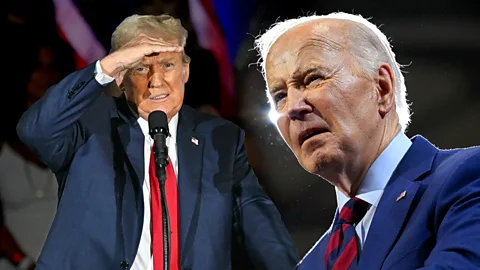
The US has become a hotspot for debates about whether people in the political sphere can ever be too old to lead. The top contenders for the 2024 US presidential election – Joe Biden and Donald Trump – are the oldest to ever seek election to the office of US President.
They are not the only US politicians to be facing questions about their age. In September 2023 Pauline Newman, a US federal judge, was suspended from hearing new cases by the Federal Circuit’s Judicial Council amid an investigation over her fitness to serve. The 96-year-old wants to carry on working, but in February lost an attempt to review her suspension. Meanwhile, in the US Senate, Republian Chuck Grassley is the oldest sitting senator at the age of 90, followed by Senator Bernie Sanders at 82.
When asked during the June debate about his age, Biden preferred to focus on his long career in politics and the experience this gave him. Trump, by contrast, pointed to his cogntive capabilities and his prowess on the golf course.
Apart from discussions of the fact that gerontocracies – societies governed by older people – are typically not representative of their population, there are other concerns.
One key focus is mental fitness. Neuroscience and psychology suggest that cognitive performance varies widely as people grow older, making it tricky to determine whether someone can be too old to lead. And while some skills tend to decline with age, others improve. Some “super agers” even possess the mental acuity of people many decades younger than themselves. So, how old is “too old” to lead – or is this the wrong question?

 Getty Images
How does ageing affect the brain?
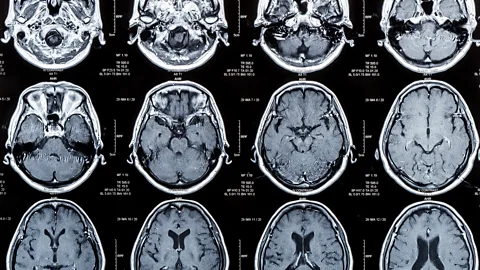
Brain volume diminishes over time. In healthy people, the prefrontal cortex is the region of the brain with the most age-related volume loss, of roughly 5% per decade. Through its connections to other parts of the brain, it helps manage executive function: a complex set of mental processes that has been likened to a thermostat or the conductor of a symphony. It’s key to discussions of leadership capacities because it’s involved in areas like problem-solving, goal-setting and impulse control.
 Getty Images
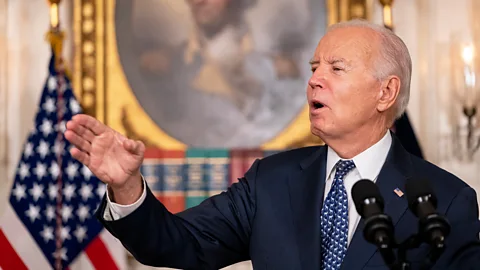
Life expectancy at birth doesn’t tell the full story of longevity, as this number is brought down by factors like infant mortality. For example, an 80-year-old in the US could expect to live another decade. This means that in reality, there is no hard and fast rule for when, or even if, a person will be significantly affected by the decline of executive function – particularly when you factor in that we don’t all have the same proficiency to begin with.
What are the benefits of an older brain?
Fisher explains that in general, averages can obscure expectations of healthy longevity and cognitive fitness, given what he calls the “tremendous individual variability” in executive function. “The battery of testing would be the best way to formally determine one’s executive function, but there is going to be wide variation in terms of how individuals function,” Fisher says.
One differentiator is comorbidities: multiple conditions like heart disease, high cholesterol, and hypertension (high blood pressure). All of these can impact brain function, particularly executive function. And while ageing does not always come with illness, it makes it more likely.
According to Fisher, “hypertension is, probably along with ageing itself, the most important, most impactful factor on brain ageing as a whole and executive function as well”. Thus, early diagnosis and treatment of hypertension is an important area of intervention to protect brain health. And positively, this is an area where treatments and knowledge are regularly improving, Fisher says.
There’s also variation in which parts of the brain can compensate for others that show some age-related damage. While the brain is generally very plastic, and many of us can partially make up for disruptions in one part of the brain by enlisting other parts of the network, others will experience a failure of compensation along the lines of Alzheimer’s disease, explains Mark Mapstone, a translational neuroscientist at University of California, Irvine.
So, while 70-year-olds will probably process new information more slowly than 30-year-olds, they may do better at synthesising it. Mapstone says that 60-year-olds typically have better vocabulary than 20-year-olds, and can thus substitute words better. For example, one study found that vocabulary scores increase until a person’s mid-60s.
“What happens with older brains is they get better at what is called crystallised intelligence,” explains Rose McDermott, who specialises in political psychology at Brown University. “You have these kind of established schemas and ways of thinking about things. And you’re able to integrate new information into existing structures much more readily and in many cases creatively than you can when you’re younger because you don’t sit on the same degree of knowledge base.”
Does politics make unique cognitive demands?
Some people, known as “super agers”, retain the cognitive functions of much younger people. These are people in their 80s and older with the cognitive health of those two to three decades younger. Super agers show larger, healthier neurons in the entorhinal cortex, a part of the brain critical to memory. Unsurprisingly, they do better on memory tests than their peers.
However, while ageing presents some cognitive challenges in general, it may present extra issues for political leaders. “Cognitive flexibility in thinking and problem solving is an essential form of cognition for political leaders to excel at in order to make good-quality decisions under uncertainty and risk,” notes Barbara Sahakian, a professor of clinical neuropsychology at the University of Cambridge. “These types of decisions are also often time limited.” However, cognitive flexibility usually dwindles over time.
Some mental changes associated with age could be particularly alarming to voters. For one thing, it appears that brain ageing can affect political attitudes. A novel study by Fisher and colleagues, of Southern California retirees with a mean age of 95, found that while political ideology remained consistent overall over a six-month period, people with cognitive impairment showed inconsistency between their political orientation and policy choices. Fisher comments of this finding: “It does appear to be that this is a consequence of cognitive impairment, that one’s political behaviour becomes relatively unanchored from one’s stated policy.”
 Getty Images
Should political leaders undergo cognitive screening?
Given the evidence of the effects of ageing on the brain, Fisher and some colleagues from different disciplines are calling for cognitive screenings for politicians, which would not necessarily depend on age. “We view cognitive screening as something analogous to the financial disclosures that politicians are often expected to make,” he says.
Cognitive function is mainly assessed through a neuropsychological evaluation – a set of standardised tests that can be so detailed and extensive that they are spread out over several days, Mapstone explains. Manijeh Berenji, an occupational medicine specialist and member of the clinical faculty at UC Irvine, believes that these assessments of politicians can be feasible and fair.
Hans Förstl, an emeritus professor of psychiatry at the Technical University of Munich, believes that it would be hard for an assessment to capture the cognitive complexity and demands of being a head of state. “Activities of daily living, cognitive performance during daily routines and challenges is decisive, not the performance during a shorter or longer test,” Förstl says. “The demands on a head of state are exceptional in every respect; no test would be able to gauge that mix of fitness, intelligence, experience and wisdom.”
McDermott, for her part, thinks that though the tests are sufficiently sound, in the US the idea is a non-starter for political reasons. Given the polarised nature of beliefs around certain politicians, she wonders, “If they passed, would the public believe it?”
However, others disagree. According to a poll by the Associated Press and the research organisation Norc Center for Public Affairs, the majority of voters see US President Joe Biden’s age as a significant concern. Meanwhile, a recent survey by CBS and the data analytics firm YouGov found that the majority of respondents thought it would be “too demanding” for someone to hold elected office as the US president over the age of 75 – which would rule out both Biden and Trump.
Whatever the public decide, it’s hard to imagine that cognitive testing will finally lay the debate to rest.
* This article was originally pubished on 15 September 2023. It was updated to include details of Nikki Haley’s political advertising campaign and details of Special Counsel Robert Hur’s report. It was further updated on 27 June ahead of the first of two presidential debates.