 AFP
AFPHis time in power was relatively brief, eventful, and like many recent Australian leaders, abruptly terminated without an election.
1. The toppling of Tony Abbott
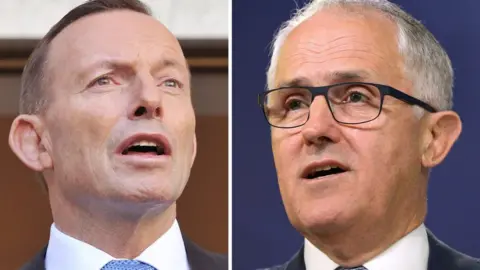
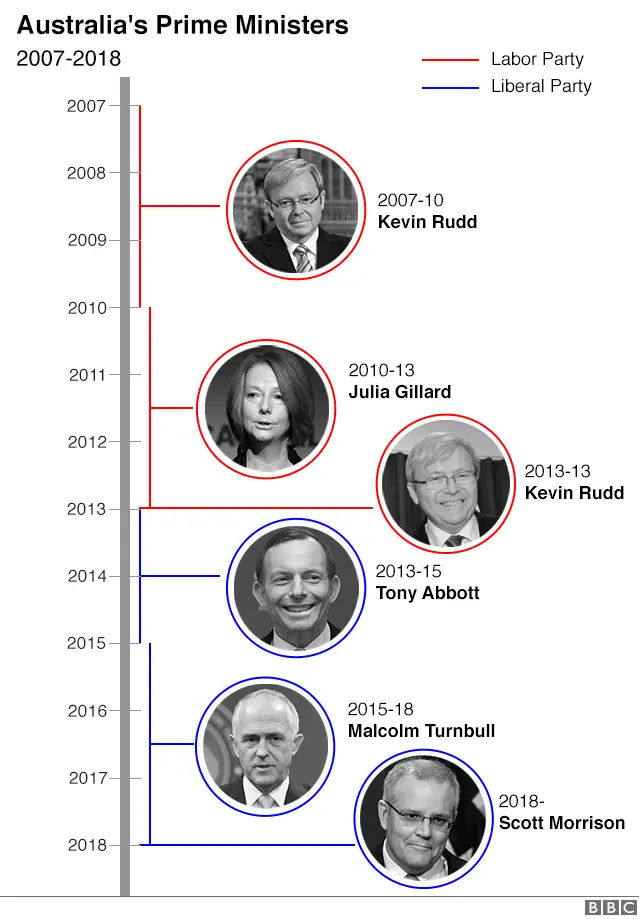
Mr Turnbull is hardly new to internal chaos. As opposition leader in 2009, he was unseated by Tony Abbott. The latter became PM in 2013, but – and stay with us – Mr Turnbull then ousted him in 2015.
In doing so, Mr Turnbull used a justification that would come back to haunt him: “We have lost 30 Newspolls [opinion polls] in a row. It is clear that the people have made up their mind about Mr Abbott’s leadership.”
Once in office, Mr Turnbull tried to differentiate himself in various ways – including by promoting more women to cabinet, and dropping an unpopular policy of conferring knights and dames.
Mr Abbott had vowed “no wrecking, no undermining, and no sniping” of the government, but his subsequent criticisms dogged Mr Turnbull.
2. Legislating same-sex marriage
Same-sex couples could not legally wed when Mr Turnbull came to power. Although a vocal supporter of change, he drew criticism by achieving it through a national postal vote last year.
“What a day for love, for equality, for respect,” Mr Turnbull said after a vote by MPs. “Australia has done it.”
3. Deputy PM revealed to be a Kiwi
Last year, several Australian lawmakers were ensnared in a constitutional eligibility crisis over their dual citizenship.
It was no concern for Mr Turnbull until his deputy, Barnaby Joyce, was told he had New Zealand citizenship – a fact that was news to him.
Mr Joyce was soon disqualified from office, imperilling Mr Turnbull’s one-seat majority in the House of Representatives.
Fortunately for the government, Mr Joyce was returned at a by-election – prompting a hands-aloft celebration with a relieved Mr Turnbull.
4. ‘Worst’ phone call with Trump
It was a rare low point in Australia’s relationship with the US, its chief ally.
5. ‘Disturbed’ (and later mending ties) with China
On the global stage, Mr Turnbull’s tenure was also defined by strained ties with China.


Last year, he announced sweeping new laws to prevent foreign interference. In explaining why they were needed, Mr Turnbull referred to “disturbing reports about Chinese influence” – but insisted that was not their sole focus.
Nonetheless it intensified discussion – and suspicion – that Australia’s largest trading partner could be “infiltrating” its politics and universities.
In a bid to ease tensions, Mr Turnbull gave a conciliatory speech in August in which he promised “clearer thinking” on China.
6. A clash over energy and climate
This was the catalyst for Mr Turnbull’s demise. After poor polls and by-election defeats, Mr Turnbull needed a win with his signature energy policy.
Despite gaining support from a majority of government MPs, a vocal group of conservatives were unhappy with the policy and instigated a rebellion.
But it did not offset leadership rumblings. They gathered pace, and were soon seen as terminal for Mr Turnbull.