 Getty Images
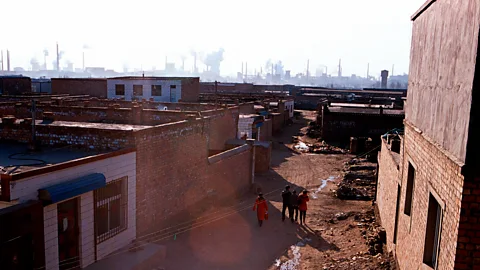
Although almost everyone in the world now breathes air that is polluted in some way, the unfolding story of air pollution is one of environmental inequality.
Every time Mithilesh turns on her stove to cook, her eyes begin to burn. The small home the 29-year-old housewife shares with her husband, daughter, son and elderly in-laws in the slums of the Indian capital Delhi quickly fills up with smoke, making it hard for anyone to see.
Mithilesh has cooked over a traditional chulha – a metal coated combustor stove that uses firewood as fuel – since she was 13 years old. She often has difficulty breathing and experiences uncontrolled bouts of coughing.
Mithilesh and her family are an extreme example of something happening globally. Although almost everyone in the world now breathes air that is polluted in some way, those who are worst hit are also the least able to protect themselves or escape from it. The story of air pollution is one of environmental inequality.

 Cornerstone Knowledge Builders
In an effort to reduce her own exposure, Mithilesh has started using a stove fueled by liquid petroleum gas (LPG) when she cooks inside her home. But it isn’t a cheap option – a typical household 14.2kg (31lbs) LPG cylinder can cost around 900 Indian Rupees (£9/$11), out of reach of many households in Mithilesh’s neighborhood, because they don’t have a steady income.
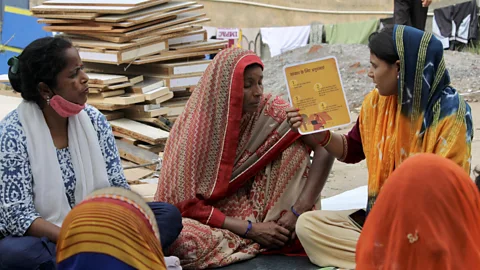
“It’s also a very gendered issue, affecting women the most,” says Sweety Sharma, programme manager at Cornerstone Knowledge Builders, an organisation working to create awareness about the hidden effects of indoor pollution in low-income communities in New Delhi. “Women painstakingly collect the firewood from forests everyday and are constantly exposed to those toxic fumes while cooking.”
With Cornerstone’s help, Mithilesh has started spreading the word in her own community about how harmful indoor pollution can be for their health.
“Women are taking this more seriously now,” she says. “We’ve always brushed off niggling health issues and discomfort while using the firewood stove, but we’re learning not to ignore it. Today, if I cook with the chulha, I take the stove outside my home whenever I can, so that the small space isn’t clouded with smoke. Even outdoors, we wrap scarves around ourselves while we cook so we don’t directly inhale smoke. We use our earnings to prioritise purchasing gas cylinders whenever we can.”
Although there are still 2.4 billion people globally who use inefficient fuels such as kerosene, wood, dung, charcoal and coal when preparing food, increasing awareness in this way and supporting the switch to cleaner ways of cooking can make a big difference.
That may not be a surprise – they are often the least equipped to deal with the health consequences of air pollution too. But even in developed, post-industralised nations of Europe and North America, the toll taken by air pollution is borne predominantly by those who are least well off or from minority communities that suffer from other inequalities.
You might also be interested to read:
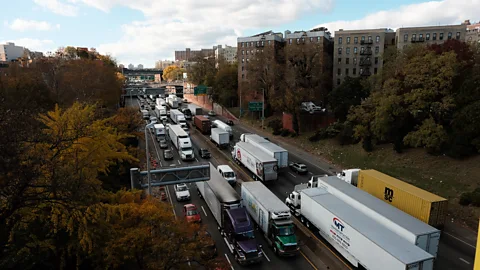
Other nations also struggle to control levels of this pollutant. “In high-income countries, air pollution from PM 2.5 is the leading cause of premature death from environmental causes,” says Stephen Polasky, professor of environmental economics and ecological studies at the University of Minnesota. In the US, air pollution has fallen significantly since legislators passed the Clean Air Act in 1970 and began phasing out leaded fuel for road vehicles in 1975. Nevertheless, PM 2.5 pollution remains the largest environmental health risk in the country, Polasky argues. And it disproportionately affects marginalised communities and people on low incomes, he says.
 Getty Images
In a 2019 study, Polasky and other researchers used air quality monitors to track emissions, human exposure to those emissions and its impact on health outcomes in the US. They found evidence that black and minority groups in the US were at a greater risk of harm from this pollution than non-Hispanic white people, despite being less responsible for causing the pollution in the first place.
“We found that people who are rich tend to consume more,” Polasky says. “But those responsible for the bulk of pollution were staying away from the bulk of the harm.” The study found that exposure to PM 2.5 declined by as much as 50% during 2002-2015 for all three ethnic groups, however this decline was not equally distributed. On average, non-Hispanic white people experienced what researchers call “a pollution advantage” – they were exposed to 7% less PM2.5s than average, but were responsible for 12% more of the average exposure due to their higher levels of consumption. The “pollution burden”, where the difference between exposure levels and pollution production swung the other way, was as high as 56-63% and experienced disproportionately by black and Hispanic communities.
Their results echo those from a study in 2014 that found non-white populations in the US are exposed to levels of nitrogen dioxide – another pollutant caused by the burning of fossil fuels – that are 38% higher than those white populations experience. If the exposure levels were reduced to the levels breathed in by white populations, the scientists estimated it could lead to 7,000 fewer deaths from heart disease each year.
Much of the disparity comes down to how close these communities live to the sources of the pollution. A major study published in 2021, found that black, Asian, Hispanic people in the US were exposed to above average levels of PM2.5s from 73-87% of the sources responsible for the pollution.
But wealth also plays a key part in people’s exposure to air pollution.
When you’re rich, you have the power to leave a polluted community, but poor people and minority groups tend to bear the consequences of a rich people’s consumption, and, conversely, cannot move home so easily, says Polasky.
 Getty Images
To understand pollution inequality, it’s important to understand where it comes from.
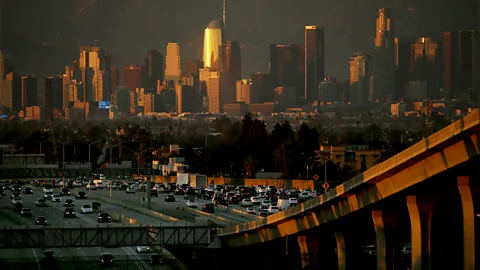
But sources of PM 2.5 pollution can vary greatly between countries. Karn Vohra, a research fellow in environmental health at University College London and his colleagues used satellite data from 2005 to 2018 to examine aerosol optical depth (AOD), a measure of the amount of light absorbed and scattered by aerosols, in order to quantify long-term changes in urban air quality.
They focused on cities in the tropics, including eight cities in India. “We found increases in most pollutants from 2005 to 2018 for most fast-growing tropical cities,” says Vohra. While air pollution in the tropics has in the past been dominated by the seasonal burning of biomass to clear land and dispose of agricultural waste, the research suggests that the densely populated cities were entering “a new era of air pollution” where emerging industries, road traffic and domestic fires were degrading the air.
While tropical cities, especially in India, were experiencing population growth at an unprecedented pace, they had limited routine pollution monitoring and were yet to implement policies or set up infrastructure to mitigate the pollution, explains Vohra.
Sources of particulate matter pollution arise every year, from newly built coal-fired power plants, to outbreaks of wildfires, says Catherine Hausman, associate professor of public policy at the University of Michigan, Ann Arbor. “I don’t see this problem going away any time soon,” she says.
Besides being a public health issue that disproportionately affects low-income and minority ethnic communities, such pollution has a direct impact on economic growth because it reduces productivity, she says. “I see this as a key issue for governments worldwide to be tackling.”
Hausman says governments have a duty to inform people about high levels of pollution, as well as what protective measures they can take. “In many parts of the world, the air pollution monitoring network is inadequate, so people just don’t know how bad pollution is in their neighborhoods,” she says. “And even when they have a monitor nearby, households might not be aware of the full range of health damages that they could be experiencing. So people don’t always take adequate measures to protect themselves,” she says.
Often, the measures available to individuals to mitigate pollution can prove to be inadequate or impractical, especially where low-income communities are concerned. While the demand for air purifiers is growing every year in India, these devices remain prohibitively expensive for people from low-income households.
“Any kind of hardship hits the weaker sections of society the most,” says Vikram Jaggi, founder and director of Asthma Chest Allergy Centres in Delhi. Physical labourers tend to spend a lot of time outdoors and are thus even more vulnerable, he adds. “We’ve found that even traffic cops, regulating traffic on Indian roads every day, have poorer lung function than their peers in other professions.”
 Getty Images
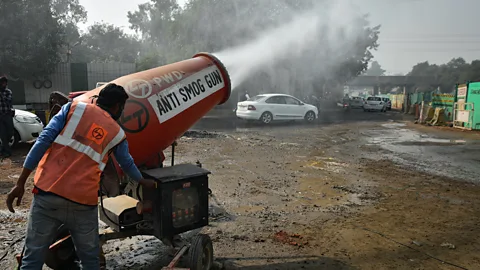
Improved monitoring can also play a part. In India, the Green Delhi App, developed by the Delhi Pollution Control Committee and the government of India’s National Informatics Centre, allows residents of the city to report any source of pollution to the authorities. Delhi’s transport minister has said users of the app helped to reduce air pollution by 30%, the first decline in eight years.
Governments around the world will need to impose tighter regulations if the problems caused by air pollution are to be tackled, argues Polasky. That means cracking down on industrial sources of pollution. “Governments should realise that pursuing economic growth at all costs can no longer be the priority, that it can cause great harm to vulnerable communities,” he says.