 Getty Images
As part of our Bright Sparks series, we asked the leaders of today to highlight some of the biggest challenges that the leaders of tomorrow can help to address. According to Oxfam International’s executive director Winnie Byanyima, one of these challenges is to create quality jobs that can improve the lives of millions of people worldwide.
To my surprise, I featured in a video last month that has been seen more than 18 million times. It was about inequality, taxes and decent jobs – the struggles we endure as we fight for a fairer world.
Sixty percent of those views came from people under 30. It makes me optimistic that it struck a chord among so many young people. Decent work is one of the markers of a civilised society, but good jobs do not just happen as if by nature. By creating the right political, legal and economic environment, the leaders of today and tomorrow can improve the lives of millions worldwide.
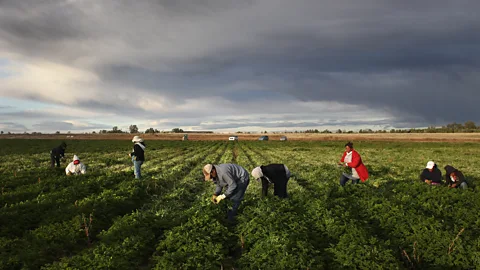
Today, 193 million people are out of work and 1.4 billion more are in vulnerable employment. Around 300 million workers globally live in extreme poverty, including 40% of all workers in developing countries. Last year billionaire fortunes increased by $2.5bn (£1.94bn) a day while the bottom half of humanity – 3.8 billion people – got poorer, by $500m a day.
Capitalism’s great engine of growth has also become one of great inequality. Our societies are losing hope that all citizens can secure a fair stake in this prosperity. We’re losing trust in our democratic institutions, which is fuelling insecurity, isolationism and populism.

 Getty Images
Men control twice as much wealth as women and 86% of the world’s companies. Disproportionately, women are sidelined into doing the unpaid care work that underpins our economies: child care, washing, cleaning, cooking, fetching water and so on. This work is worth around $10tn a year but it is not counted as GDP.
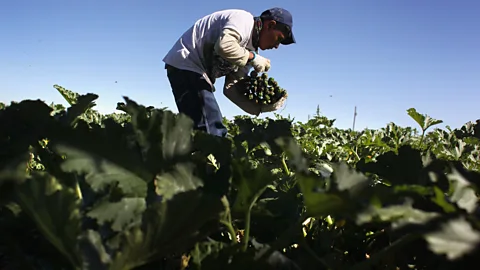
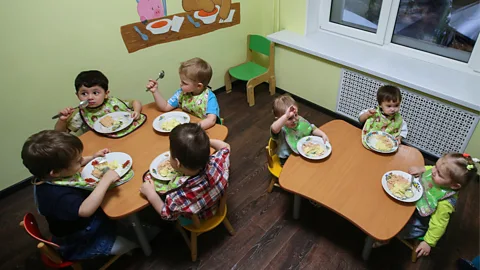
Governments can change this by providing universal public services such as health, education and water, and better social protections like pensions, child support and child care. When schooling is free, girls benefit most because they are the last to attend when their family has to pay. Rio de Janeiro has increased employment rates for low-income mothers by 27% by providing free public childcare. Parts of Zimbabwe have reduced women’s care workload by four hours a day on average just by improving access to clean water.
 Getty Images
A new model for businesses
Businesses that drive a different kind of prosperity are needed now more than ever.
Since the 1970s, the dominant business model has insisted that a company’s prime responsibility, above all others, is to maximise profits for its shareholders. In 2018, for example, UK companies paid out a record around £100bn ($129bn) to shareholders while average worker wages stagnated. While many companies emphasise their corporate social responsibility schemes, generating a financial return is still their main goal. It’s difficult for a CEO to justify paying more tax and higher wages at the expense of shareholder profit.
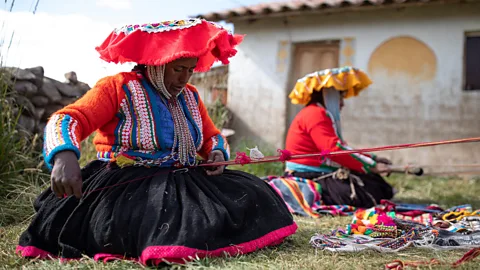
However, there are many successful alternatives: social enterprises, co-operatives and employee- and farmer-owned organisations. Spain’s Mondragon turns over £10.5bn under the ownership and decision-making of its tens of thousands of employees, where the highest-paid earns no more than eight times the lowest. In the US and Europe, social enterprises like these contribute as much as 10% of GDP and create jobs twice as fast as the traditional private sector.
 Getty Images
But these businesses are at a disadvantage against competitors that put profits before public good.
Governments can penalise businesses which don’t pay workers or suppliers fairly. Ecuador’s government did this for its banana workers and producers – the government stopped companies from paying dividends until all workers were paid a living wage. Other measures, such as limiting the ratio of executive-to-worker pay and ensuring workers have a seat at the board table, would help re-balance the power between companies and workers.
A universal labour guarantee, as recommended by the International Labour Organization, is a calling for its age. It proposes to protect workers’ rights and living wages, fortify social protection and give stronger worker controls.
This would be important for those labour markets now being disrupted by technology. Some 45% of jobs in the US and 56% in South East Asia are at risk of automation. Artificial intelligence, automation and robotics will create new jobs, but they will shed lots of others. People should be helped to acquire new skills through a universal entitlement to lifelong learning. This would help, but alone it’s not enough.
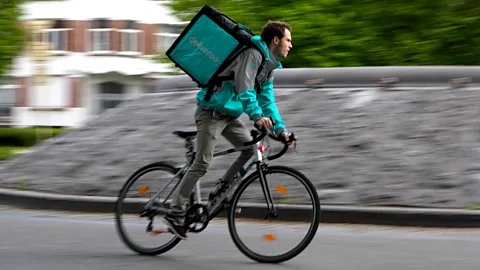
Today’s leaders need to regulate who owns and benefits from new technology. Crowd-working websites and app-mediated work that enable the ‘gig economy’ are creating ‘digital day labourers’, redolent of 19th Century working conditions that existed before regulation. As we celebrate innovation and reward their creators, we must have the means to prevent tech monopolies from causing social harm.
 Getty Images
The solutions to inequality and decent work ultimately rely on our collective power as voting citizens and consumers. Our governments should make laws that benefit the many over the elite few. Laws that usher in accessible, publicly-funded, quality education for all, paid for by taxing the rich fairly. Laws that stop companies from paying their workers and suppliers poverty wages and abusing our environment.
This will not happen of its own accord or by “the magic of the market”.
With a new generation of political leaders thinking imaginatively about a different, more human economy, the time is right to lay a better foundation for the future.
Voters, consumers and workers need to fight for it.
Winnie Byanyima is the Executive Director of Oxfam International.
If you liked this story, sign up for the weekly bbc.com features newsletter called “If You Only Read 6 Things This Week”. A handpicked selection of stories from BBC Future, Culture, Capital and Travel, delivered to your inbox every Friday.